
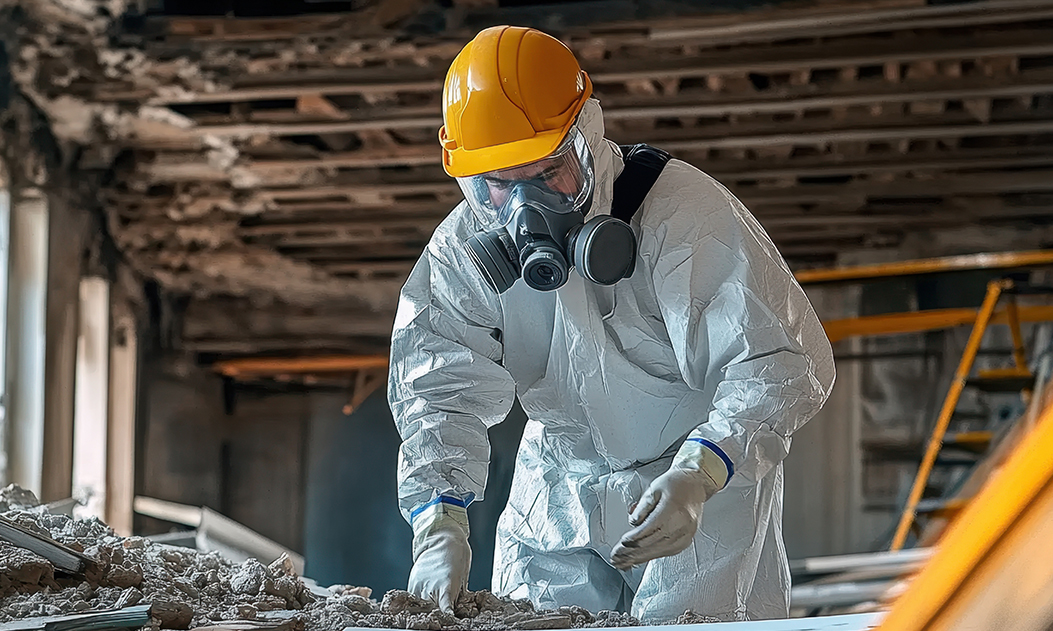
Compliance isn’t just a box to check when handling asbestos in Washington, DC government buildings—it’s a fundamental responsibility that protects workers, occupants, and the public. Both OSHA and EPA have established comprehensive regulations governing asbestos handling, and professional contractors must navigate these requirements while meeting additional federal and local standards.
Understanding how experienced asbestos services maintain compliance helps government facility managers recognize quality work and avoid the costly consequences of violations. Here’s how professional contractors ensure every project meets or exceeds OSHA and EPA requirements.
Understanding the Regulatory Framework
Government buildings in Washington, DC operate under a complex regulatory environment where multiple agencies have jurisdiction.
OSHA Standards
The Occupational Safety and Health Administration focuses on worker protection through several key regulations:
29 CFR 1926.1101: The primary construction standard governing asbestos work. It establishes permissible exposure limits, requires specific work practices, and mandates worker training.
Permissible Exposure Limit (PEL): Workers cannot be exposed to more than 0.1 fibers per cubic centimeter averaged over an eight-hour workday.
Action Level: When exposure may reach 0.1 fibers per cubic centimeter, additional monitoring and medical surveillance become mandatory.
These standards apply to any government building project where asbestos may be disturbed.
EPA Regulations
The Environmental Protection Agency addresses public health and environmental concerns:
NESHAP (National Emission Standards for Hazardous Air Pollutants): Governs demolition and renovation activities that could release asbestos fibers into the environment.
Notification Requirements: Projects meeting specific thresholds must notify EPA at least 10 working days before beginning work.
Waste Disposal Standards: Strict rules govern how asbestos waste is packaged, transported, and disposed of to protect communities and the environment.
DC-Specific Requirements
The DC Department of Energy & Environment adds local oversight:
- Contractor licensing and worker certification
- Project notifications and permits
- Local disposal facility approvals
- Additional reporting requirements
Professional contractors integrate all these requirements into seamless project execution.
Worker Protection: Meeting OSHA Standards
OSHA compliance begins with comprehensive worker protection measures that go beyond minimum requirements.
Certified Training Programs
Every worker handling asbestos in government buildings must complete accredited training:
Initial Training: New workers complete at least 32 hours of training covering asbestos hazards, regulations, protective equipment, and safe work practices.
Annual Refresher: Workers attend eight-hour refresher courses annually to maintain certification and stay current with regulation changes.
Specialized Training: Supervisors and project designers complete additional training specific to their roles.
This training ensures workers understand both the “what” and “why” of safety procedures, creating a culture of compliance.
Exposure Monitoring
Professional contractors implement comprehensive monitoring programs:
Initial Monitoring: Before projects begin, air samples establish baseline exposure levels and inform protection strategies.
Periodic Monitoring: Throughout projects, regular sampling verifies that exposure remains below permissible limits.
Task-Based Monitoring: Specific activities that may generate higher exposure receive focused attention.
When monitoring indicates exposure approaching action levels, contractors immediately implement additional controls rather than waiting for limits to be exceeded.
Respiratory Protection
OSHA requires specific respiratory protection based on exposure levels:
Half-Face Respirators: Acceptable for low-exposure situations with proper fit testing.
Full-Face Respirators: Standard for most asbestos removal work, providing both respiratory and eye protection.
Powered Air-Purifying Respirators (PAPRs): Used in high-exposure situations, offering enhanced protection and comfort.
Professional contractors maintain respiratory protection programs that include:
- Annual fit testing for each worker
- Regular equipment inspection and maintenance
- Training on proper use and limitations
- Medical evaluations ensuring workers can safely wear respirators
Protective Clothing
Complete body protection prevents fiber contamination:
- Disposable full-body suits with hoods and boot covers
- Multiple layers when working with highly friable materials
- Proper donning and doffing procedures to prevent contamination
- Decontamination protocols before leaving work areas
These measures protect both workers and prevent fiber transfer to clean areas.
Environmental Controls: Meeting EPA Standards
While OSHA focuses on workers, EPA regulations protect the broader community from asbestos exposure.
Project Notifications
NESHAP compliance begins with proper notification:
Threshold Determinations: Projects are evaluated to determine if notification is required based on material quantities and building size.
Timely Submission: Notifications reach EPA at least 10 working days before work begins, providing adequate review time.
Accurate Information: Notifications include detailed project descriptions, schedules, abatement methods, and waste disposal plans.
Update Procedures: If project details change, amended notifications are submitted promptly.
Missing or late notifications trigger penalties, so professional contractors build notification timelines into initial project planning.
Emission Controls
EPA standards require measures that prevent fiber release to the environment:
Adequate Wetting: Materials are thoroughly wetted before and during removal to minimize fiber generation.
HEPA Filtration: All ventilation from work areas passes through HEPA filters before discharge, capturing fibers before they reach the environment.
Leak-Tight Containment: Work areas are sealed to prevent emissions, with continuous monitoring verifying effectiveness.
Proper Waste Handling: Materials are wetted, sealed in approved containers, and kept enclosed throughout transportation.
These controls create multiple barriers preventing environmental contamination.
Waste Disposal Compliance
EPA regulations govern asbestos waste from generation through final disposal:
Proper Packaging: Double-bagged in six-mil plastic or placed in rigid containers, with all bags sealed and labeled with required warnings.
Waste Manifests: Detailed forms track waste from generation site through transportation to disposal facility.
Approved Disposal Sites: Waste goes only to EPA-approved landfills equipped to handle asbestos.
Record Retention: Disposal documentation is maintained according to EPA requirements, typically for decades.
Professional contractors maintain relationships with approved disposal facilities and handle all manifesting and documentation.
Documentation: Proving Compliance
Both OSHA and EPA require extensive documentation, and government projects often demand additional records.
Pre-Project Documentation
Compliance begins before work starts:
Inspection Reports: Certified inspectors document asbestos locations, types, and conditions.
Project Plans: Detailed work plans describe abatement methods, safety measures, and compliance procedures.
Worker Certifications: Current training certificates for all workers are compiled and readily available.
Notifications: Copies of all regulatory notifications and confirmations are maintained.
During-Project Records
As work progresses, comprehensive logs document compliance:
Daily Logs: Supervisors record activities, personnel, monitoring results, and any incidents.
Air Monitoring Results: All sampling data is recorded, showing exposure levels remain within limits.
Waste Tracking: Manifests document all waste generated, transported, and disposed of.
Inspection Records: Regular safety inspections verify ongoing compliance with procedures.
Post-Project Documentation
Projects conclude with final compliance documentation:
Clearance Testing Reports: Independent laboratory results proving areas meet safety standards.
Final Waste Manifests: Confirmation that all waste reached approved disposal facilities.
Project Closeout Reports: Comprehensive summaries documenting all aspects of compliance.
Photographs: Visual documentation of key project phases and completed work.
This documentation protects government agencies during audits and provides records for future facility management.
Quality Assurance Programs
Professional contractors implement systematic quality assurance to ensure consistent compliance.
Internal Audits
Regular internal reviews verify that procedures are followed:
- Supervisors conduct daily site inspections
- Safety managers perform weekly compliance audits
- Management reviews documentation and procedures monthly
- Issues are identified and corrected immediately
Third-Party Oversight
Independent verification adds accountability:
Industrial Hygienists: Certified professionals monitor projects, review procedures, and provide objective assessments.
Laboratory Testing: Accredited labs conduct all air monitoring and clearance testing, ensuring unbiased results.
Regulatory Inspections: Contractors welcome regulatory agency inspections, demonstrating confidence in their compliance.
Continuous Improvement
Quality programs identify opportunities for improvement:
- Worker feedback informs procedure updates
- Lessons learned from each project enhance future work
- Regulatory changes are quickly incorporated
- Industry best practices are adopted proactively
Training and Competency
Compliance depends on knowledgeable, skilled workers who understand both regulations and their rationale.
Comprehensive Training Programs
Beyond minimum certification requirements, professional contractors provide:
Regulation Updates: Regular sessions keep workers current with OSHA and EPA changes.
Site-Specific Training: Workers receive detailed briefings on each government building’s unique requirements.
Equipment Training: Hands-on instruction ensures proper use of protective equipment and abatement tools.
Emergency Response: Workers know how to respond to containment breaches or other incidents.
Competency Verification
Training is verified through:
- Written tests demonstrating knowledge retention
- Practical evaluations confirming proper technique
- Supervisor observation during actual work
- Ongoing performance monitoring
Workers who don’t demonstrate competency receive additional training or reassignment.
Communication and Transparency
Compliance succeeds when all stakeholders understand project requirements and status.
Regular Updates
Facility managers receive:
- Daily progress reports
- Monitoring results as they’re generated
- Immediate notification of any issues or concerns
- Scheduled meetings to review compliance status
Regulatory Coordination
Professional contractors maintain open communication with:
- EPA regarding notifications and any questions
- OSHA concerning worker protection programs
- DC DOEE regarding local requirements
- Building management regarding operations and access
This transparency prevents misunderstandings and demonstrates commitment to compliance.
The Cost of Compliance
Some view regulatory compliance as a burden, but in government buildings, it’s an essential investment.
Direct Benefits
Proper compliance provides:
- Protection from fines and penalties that can reach tens of thousands of dollars
- Reduced liability exposure from worker or occupant exposure
- Smooth project completion without regulatory delays
- Documentation supporting future facility decisions
Indirect Benefits
Beyond avoiding penalties, compliance delivers:
- Safer work environments that attract quality workers
- Enhanced reputation as a responsible agency
- Public confidence in government facility management
- Peace of mind for building occupants and visitors
Final Thoughts
OSHA and EPA compliance in government building asbestos projects isn’t complicated when you work with experienced professionals who understand the requirements and build them into every aspect of their work.
From comprehensive worker protection programs to meticulous environmental controls and extensive documentation, professional asbestos services in Washington, DC integrate compliance into project execution rather than treating it as an afterthought.
For government facility managers, partnering with contractors who prioritize compliance means projects that protect people, meet legal requirements, and deliver genuinely safe buildings ready for continued public service. That’s not just good practice—it’s the only acceptable standard for government facilities serving the citizens of Washington, DC.
