
Government buildings across Virginia carry decades of history. From county courthouses to municipal offices, many of these structures were built when lead-based materials were standard practice. Today, protecting public servants and visitors from lead exposure isn’t optional—it’s mandatory.
Lead hazards in government facilities create serious health risks and legal liabilities. That’s why government buildings lead abatement Virginia requires a systematic, professional approach that balances public safety with operational continuity.
This guide walks through the complete lead abatement process specifically designed for Virginia’s government properties.
Why Government Buildings Need Specialized Lead Abatement
Unlike residential projects, government buildings present unique challenges:
- Continued Operations: Most facilities can’t shut down completely during abatement
- Public Access: Work must protect employees, visitors, and neighboring properties
- Historic Preservation: Many government buildings are protected structures
- Regulatory Complexity: Multiple federal, state, and local regulations apply
- Budget Accountability: Public funds require transparent, documented processes
Professional government buildings lead abatement service Virginia providers understand these complexities and plan accordingly.
Step 1: Initial Assessment and Testing
Before any work begins, certified inspectors conduct a comprehensive evaluation.
What happens during assessment:
- Visual inspection of all painted surfaces, pipes, and building materials
- Collection of samples for laboratory analysis
- Documentation of all findings with photographic evidence
- Risk assessment prioritizing the most hazardous areas
For Virginia government facilities, this phase typically includes coordination with facility managers to access all areas, including HVAC systems, electrical rooms, and maintenance spaces that staff rarely enter.
The assessment report becomes the foundation for the entire abatement plan.
Step 2: Developing the Abatement Plan
Once lead hazards are identified, specialists create a detailed work plan tailored to the building’s specific needs.
Key components of the plan:
- Scope of work defining which materials require removal, encapsulation, or enclosure
- Timeline that minimizes disruption to government operations
- Containment strategies to isolate work areas
- Worker protection protocols
- Waste disposal procedures
- Air monitoring requirements
- Emergency response procedures
For busy government facilities, lead abatement services for government buildings in Virginia often recommend phased approaches. This allows portions of the building to remain operational while work proceeds in isolated sections.
Step 3: Notification and Permits
Virginia law requires proper notification before lead abatement begins in public buildings.
Required notifications include:
- Virginia Department of Professional and Occupational Regulation (DPOR)
- Building occupants and employees
- Neighboring properties if applicable
- Local health departments
- EPA notification for projects disturbing certain square footage
Obtaining proper permits protects both the government entity and ensures compliance with federal and state regulations. Licensed contractors handle this administrative burden, keeping projects on schedule.
Step 4: Containment Setup
Proper containment prevents lead dust from spreading beyond the work area—absolutely critical in occupied government buildings.
Containment measures include:
- Heavy-duty polyethylene sheeting sealed with specialized tape
- Multiple layers of barriers between work zones and occupied spaces
- Negative air pressure systems with HEPA filtration
- Decontamination chambers for workers entering and exiting
- Warning signs and restricted access controls
For larger government facilities, contractors may establish designated pathways that allow normal operations to continue safely away from abatement zones.
Step 5: Worker Protection and Safety Protocols
Lead abatement crews working on government buildings lead abatement Virginia projects must follow strict safety requirements.
Worker protection includes:
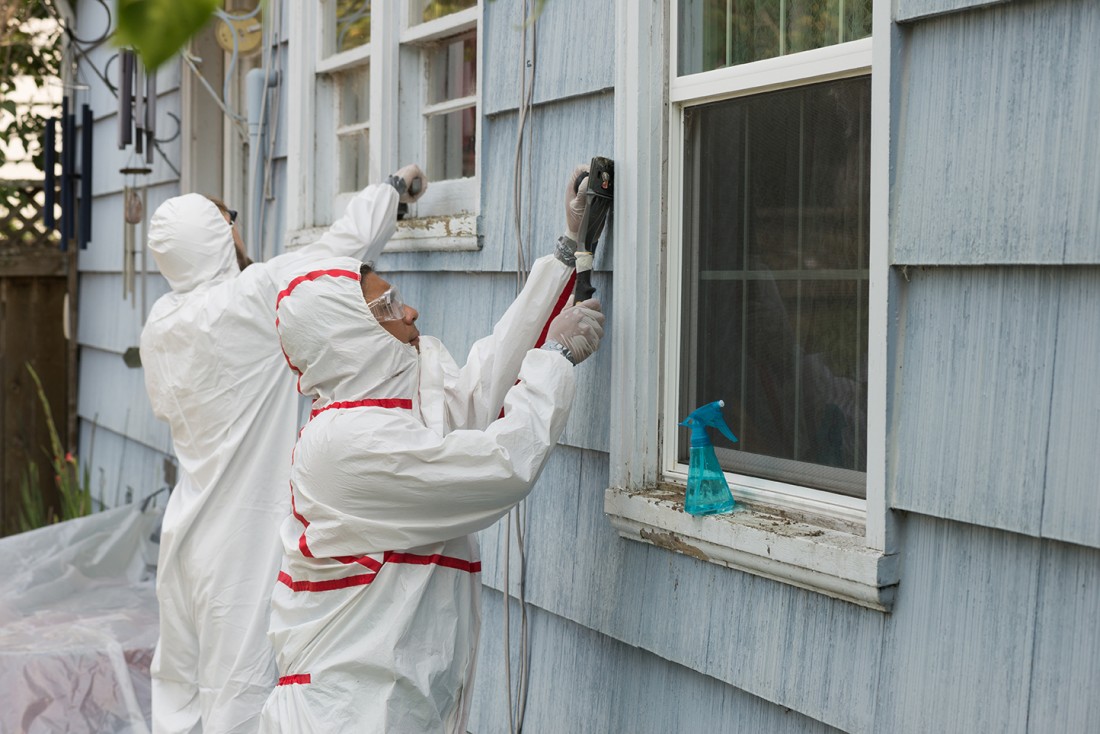
- Full-body disposable suits
- Respiratory protection with HEPA-filtered respirators
- Protective gloves and shoe covers
- Regular blood-lead level monitoring
- Daily safety briefings
- On-site medical monitoring for extended projects
Virginia’s OSHA regulations mandate these protections, and reputable contractors exceed minimum requirements to ensure worker safety.
Step 6: Lead Removal or Stabilization
Depending on the assessment findings and building constraints, abatement takes one of several forms.
Removal: Complete elimination of lead-containing materials. This is most common for deteriorating paint, windows, or plumbing.
Encapsulation: Sealing lead-based paint with specialized coatings that prevent dust release. Often used on walls and ceilings in good condition.
Enclosure: Installing new surfaces over lead-containing materials. Effective for flooring, walls, and ceilings that don’t require removal.
During removal, workers use wet methods to minimize dust generation. HEPA vacuums and continuous air scrubbing maintain safe conditions.
Step 7: Cleaning and Decontamination
Once materials are removed or stabilized, thorough cleaning is essential.
Cleaning procedures include:
- HEPA vacuuming all surfaces within containment
- Wet wiping walls, floors, and fixtures multiple times
- Cleaning all tools and equipment
- Proper disposal of all protective materials
- Final detailed cleaning of the entire work zone
Standard household cleaning methods cannot adequately remove lead dust. Professional lead removal for government properties in Virginia uses specialized techniques proven to reduce lead levels to safe standards.
Step 8: Air Monitoring and Clearance Testing
Before work areas reopen, independent testing confirms safety.
Clearance testing involves:
- Air sampling to measure airborne lead levels
- Dust wipe sampling on floors, windowsills, and other surfaces
- Visual inspection confirming no visible debris
- Laboratory analysis of all samples
- Comparison of results against EPA and Virginia standards
Only after receiving passing clearance results can containment barriers be removed and spaces returned to normal use.
Government building managers receive detailed documentation proving compliance—essential for records and liability protection.
Step 9: Waste Disposal
Lead-contaminated materials are hazardous waste requiring special handling.
Proper disposal includes:
- Double-bagging all waste in leak-proof containers
- Clear labeling as required by federal law
- Transport by licensed haulers
- Disposal at EPA-approved facilities
- Chain-of-custody documentation
- Final disposal receipts for government records
Improper disposal can result in significant fines and environmental damage. Licensed government buildings lead abatement service Virginia providers handle this critical step correctly.
Step 10: Final Documentation and Reporting
The abatement process concludes with comprehensive documentation.
Final reports include:
- Complete project summary
- Before and after photographs
- Laboratory test results
- Clearance certificates
- Waste disposal manifests
- Worker exposure records
- Compliance certifications
For government entities, this documentation serves multiple purposes: budget justification, regulatory compliance, employee safety records, and historical maintenance files.
Timeline Expectations for Government Buildings
Lead abatement timelines vary based on building size and hazard severity:
- Small facilities (under 5,000 sq ft): 1-2 weeks
- Medium facilities (5,000-20,000 sq ft): 2-4 weeks
- Large complexes (over 20,000 sq ft): 4-12 weeks or longer
Phased projects in occupied buildings may extend timelines but allow continued operations.
Choosing Qualified Contractors
Not all abatement companies have experience with government projects. When selecting lead abatement services for government buildings in Virginia, verify:
- Virginia DPOR licensing and EPA certification
- Experience with public sector projects
- Liability insurance appropriate for government contracts
- References from other government entities
- Understanding of public procurement requirements
- Transparent pricing and detailed proposals
Companies like Rath Enterprises, Inc. specialize in government building abatement, combining technical expertise with the administrative knowledge public projects demand.
Maintaining Lead-Safe Government Buildings
After abatement, ongoing maintenance prevents future hazards.
Post-abatement maintenance includes:
- Regular inspections of painted surfaces
- Immediate repair of any damage
- Training maintenance staff on lead-safe practices
- Documentation of all repairs
- Periodic re-testing in high-wear areas
Proactive maintenance extends the benefits of professional abatement and protects building occupants long-term.
Final Thoughts
Lead hazards in Virginia’s government buildings are a serious concern, but systematic professional abatement provides a clear path to safety. From initial assessment through final clearance, each step builds on the last to ensure thorough, compliant lead removal.
Government administrators responsible for building safety should partner with experienced lead removal for government properties in Virginia specialists who understand both the technical and administrative requirements of public sector projects.
Don’t wait for deteriorating conditions to force emergency action. Schedule a professional assessment and take the first step toward protecting your facility’s occupants.
If your Virginia government building was constructed before 1978, contact a licensed provider of government buildings to lead abatement Virginia services today. Professional abatement protects public health, ensures regulatory compliance, and preserves these important community assets for future generations.
