
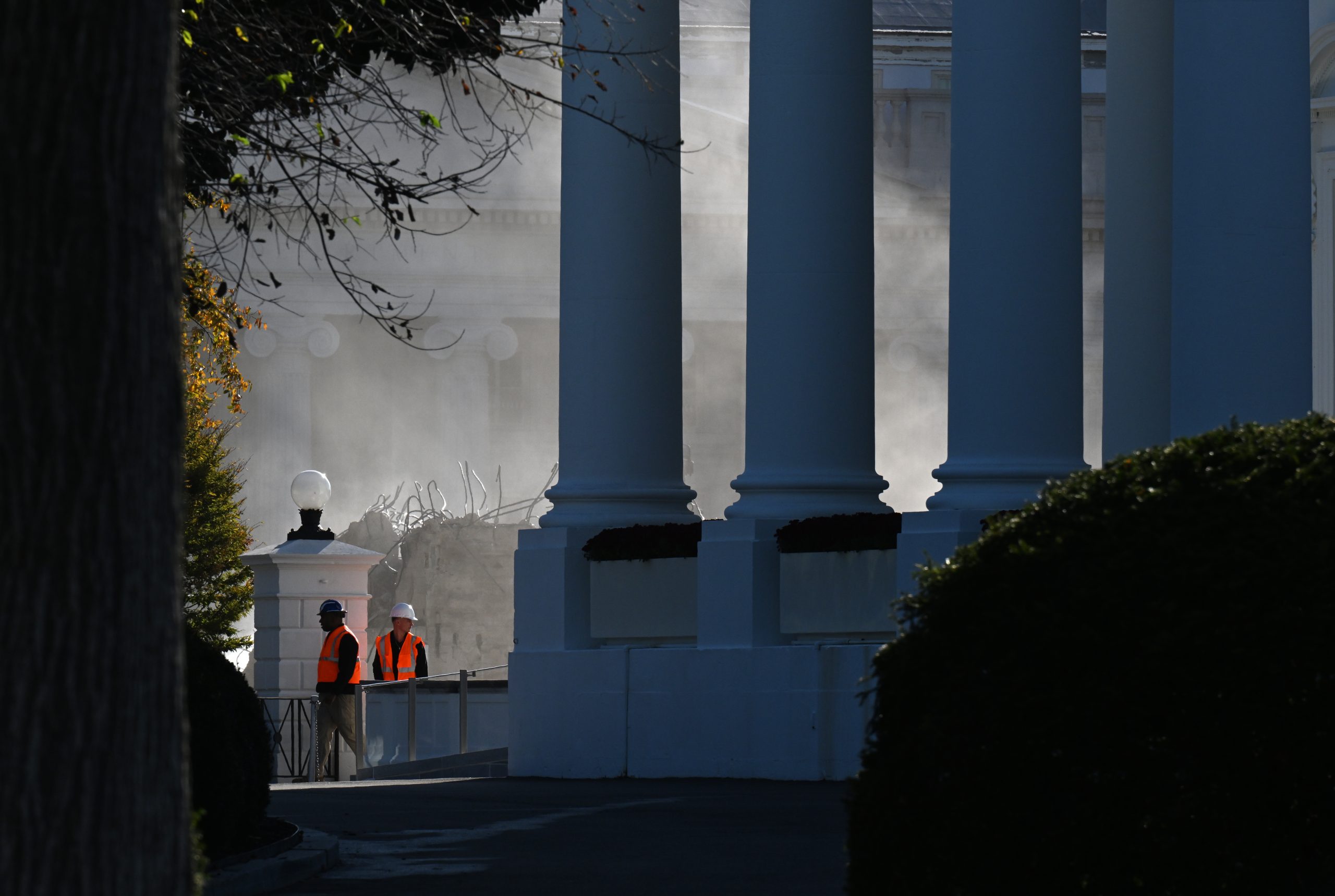
Government buildings in Washington, DC require specialized care when addressing asbestos hazards. Whether you’re managing a federal office building, municipal facility, or public service center, understanding how professional abatement works helps you make informed decisions and ensures your project succeeds.
After decades of working with government properties, we’ve refined our approach into a clear five-step process that prioritizes safety, maintains compliance, and delivers results. Here’s exactly how we handle asbestos abatement in Washington, DC government buildings.
Step 1: Inspection and Assessment
Every successful asbestos project begins with thorough understanding of what you’re dealing with.
Why This Step Matters
You cannot safely remove asbestos you don’t know exists. Many government buildings constructed before 1980 contain asbestos in unexpected places. Assumptions lead to dangerous surprises mid-project—surprises that put workers at risk and blow budgets.
What We Do
Our certified inspectors conduct comprehensive building surveys:
Complete Building Evaluation: We examine all areas affected by your planned work, including hidden spaces behind walls, above ceilings, and in mechanical rooms.
Material Sampling: We collect samples from all suspected asbestos-containing materials using EPA-approved techniques that prevent fiber release.
Laboratory Analysis: Samples go to accredited laboratories where trained analysts use polarized light microscopy or transmission electron microscopy to definitively identify asbestos content.
Risk Assessment: We evaluate material condition, friability, and location to assess risk levels and inform abatement strategies.
What You Receive
Within days of sampling, we deliver detailed inspection reports that include:
- Location maps showing where asbestos was found
- Material types and quantities
- Current condition assessments
- Photographs documenting findings
- Risk classifications
- Recommended abatement approaches
- Preliminary cost and timeline estimates
This documentation becomes the foundation for regulatory notifications and project planning.
Regulatory Compliance
This inspection step satisfies EPA and DC requirements for asbestos surveys before renovation or demolition work. Having proper documentation from the start prevents regulatory delays later.
Step 2: Planning and Preparation
With inspection results in hand, we develop customized plans for your specific building and project needs.
Abatement Strategy Development
Not all asbestos requires the same approach. We recommend strategies based on:
Material Type: Floor tiles require different handling than pipe insulation or ceiling materials.
Material Condition: Damaged, deteriorating materials need immediate removal, while intact materials may be candidates for encapsulation.
Project Scope: Renovation plans determine whether removal, enclosure, or encapsulation best serves your needs.
Building Operations: We consider how to minimize disruption to government services and building occupants.
Safety Planning
Every project receives a customized safety plan addressing:
- Worker protection equipment and procedures
- Containment system specifications
- Air monitoring locations and frequencies
- Decontamination protocols
- Emergency response procedures
These plans meet or exceed OSHA, EPA, and DC requirements while addressing your building’s unique characteristics.
Regulatory Submissions
We handle all required notifications and permits:
EPA NESHAP Notifications: Submitted at least 10 working days before work begins, these notifications provide EPA with project details and timelines.
DC DOEE Permits: We prepare and submit all required DC Department of Energy & Environment permits and applications.
GSA Coordination: Federal building projects receive appropriate General Services Administration notifications and approvals.
Building Management Communication: We coordinate with facility managers to schedule work, arrange access, and plan for operational impacts.
Timeline Development
Realistic project schedules account for:
- Regulatory notification and approval periods
- Containment and preparation time
- Actual abatement work duration
- Clearance testing and approval
- Site restoration
We build in appropriate buffers to prevent schedule pressure from compromising safety.
Step 3: Containment and Site Setup
Before removing any asbestos, we create controlled work environments that protect workers and prevent fiber spread.
Work Area Isolation
Professional containment involves multiple protective layers:
Physical Barriers: We seal work areas with heavy-duty six-mil polyethylene sheeting covering all openings—doors, windows, vents, and wall penetrations. Critical seals receive multiple layers for redundancy.
Negative Air Pressure: HEPA-filtered machines create pressure differentials pulling air into work zones rather than pushing it out. This ensures that even if physical barriers are compromised, contamination stays contained.
Decontamination Chambers: Three-chamber systems provide clean rooms, shower facilities, and contaminated areas for proper worker entry and exit.
Warning Signage: Clear signs identify restricted areas, communicate hazards, and prevent unauthorized entry.
Air Monitoring Installation
We establish comprehensive monitoring systems:
Inside Containment: Monitors within work areas verify that worker protection measures maintain safe exposure levels.
Boundary Monitoring: Devices at containment edges detect any fiber migration immediately.
Occupied Area Monitoring: Monitors in adjacent spaces verify that building occupants remain protected.
Personal Monitoring: Individual workers wear devices measuring their personal exposure levels.
This multi-layered approach provides real-time verification that safety systems are working.
Building Systems Management
Government buildings often operate continuously. We coordinate with facility management to:
- Modify HVAC systems preventing contaminated air distribution
- Establish alternative routes for building traffic
- Maintain security protocols
- Minimize disruption to essential services
Equipment and Material Staging
All necessary equipment and supplies are staged before work begins:
- Removal tools and wetting equipment
- Waste containers and packaging materials
- HEPA vacuums and cleaning supplies
- Worker protective equipment
- Emergency response materials
Proper staging prevents delays once abatement starts.
Step 4: Safe Removal and Waste Management
With preparation complete, our trained technicians execute the actual asbestos removal.
Worker Protection
Every technician enters work areas fully protected:
- Full-face respirators with HEPA filters providing respiratory protection
- Disposable protective suits covering entire bodies
- Gloves and boot covers preventing skin contact
- Hard hats when overhead hazards exist
Workers undergo medical evaluations confirming they can safely wear respirators, and receive annual fit testing ensuring proper equipment seal.
Removal Procedures
Our removal process minimizes fiber release at every step:
Thorough Wetting: Materials are saturated with amended water containing surfactants that help capture and control fibers.
Controlled Extraction: We remove materials in manageable sections, working systematically to prevent unnecessary disturbance.
Immediate Containment: Removed materials go directly into approved containers—double-bagged in six-mil polyethylene or placed in rigid drums.
Continuous Monitoring: Throughout removal, air monitoring verifies that fiber levels remain within acceptable limits.
Surface Decontamination
After material removal, comprehensive cleaning eliminates residual contamination:
HEPA Vacuuming: All work area surfaces are vacuumed using HEPA-filtered equipment that captures microscopic fibers.
Wet Wiping: Surfaces receive thorough wet wiping with disposable cloths that trap remaining particles.
Multiple Passes: Critical areas receive multiple cleaning cycles until visual inspection confirms cleanliness.
Waste Handling
All asbestos waste receives proper treatment:
Proper Packaging: Materials are wetted, sealed in approved bags or containers, and labeled with required hazard warnings.
Secure Staging: Sealed waste is staged in designated areas within containment until ready for transport.
Manifesting: Detailed waste shipment records track every container from your building to disposal facility.
Licensed Transportation: Only licensed haulers transport asbestos waste using enclosed vehicles preventing fiber release.
Approved Disposal: Waste goes exclusively to EPA-approved landfills permitted to accept asbestos materials.
Disposal Confirmation: We receive and maintain documentation confirming proper disposal of every container.
This comprehensive waste tracking provides complete accountability and protects you from future liability.
Step 5: Clearance Testing and Final Documentation
Projects aren’t complete until independent testing confirms areas are safe for reoccupancy.
Visual Inspection
Before air testing begins, certified inspectors conduct thorough visual examinations:
- Verifying complete removal of asbestos materials
- Confirming effective surface cleaning
- Checking containment integrity
- Identifying any remaining concerns
Only after passing visual inspection does air testing proceed.
Aggressive Air Clearance Testing
Independent laboratories conduct final air quality testing:
Aggressive Sampling: Work areas are deliberately disturbed through sweeping and other activities simulating worst-case conditions before collecting air samples.
Multiple Sample Locations: We collect samples throughout work areas and at containment boundaries.
Laboratory Analysis: Accredited laboratories analyze samples using transmission electron microscopy, the most sensitive testing method available.
Comparison to Standards: Results are compared to EPA clearance levels and project-specific standards.
Clearance Decision
Areas are released for reoccupancy only after:
- Visual inspection confirms thorough cleaning
- Air testing results meet or exceed clearance standards
- All documentation is complete and accurate
- Independent professionals certify safety
We never release areas based on our own judgment alone—independent verification protects everyone.
Containment Removal
With clearance obtained, we carefully remove containment materials:
- Plastic sheeting and barriers are wetted, folded, and sealed in disposal bags
- Decontamination chambers are dismantled and removed
- Equipment is cleaned and removed from the building
- Areas receive final cleaning preparing them for normal use
Comprehensive Documentation
You receive complete project records including:
Inspection Reports: Initial surveys and laboratory analysis results.
Project Plans: Abatement procedures and safety protocols.
Daily Logs: Documentation of all activities throughout the project.
Air Monitoring Results: All monitoring data showing exposure levels remained safe.
Waste Documentation: Manifests and disposal confirmations for all removed materials.
Clearance Certificates: Independent testing results and clearance approvals.
Photographs: Visual documentation of key project phases.
Final Report: Comprehensive summary of all project aspects.
This documentation demonstrates compliance, supports future facility decisions, and provides protection during audits or legal reviews.
Why This Process Works for Government Buildings
This five-step approach succeeds because it:
Prioritizes Safety: Every step includes multiple safety measures protecting workers, occupants, and the public.
Ensures Compliance: We integrate EPA, OSHA, and DC requirements throughout the process rather than treating them as afterthoughts.
Maintains Transparency: Regular communication and comprehensive documentation keep stakeholders informed and confident.
Delivers Certainty: Independent testing and verification provide objective proof that buildings are safe.
Minimizes Disruption: Careful planning and professional execution keep government operations running during abatement.
What This Means for Your Project
Understanding this process helps you:
- Set realistic expectations for timelines and costs
- Evaluate contractor proposals effectively
- Communicate project requirements to stakeholders
- Ensure your building receives proper professional service
Government buildings deserve nothing less than this systematic, professional approach to asbestos abatement.
Final Thoughts
Asbestos abatement in Washington, DC government buildings is serious business that requires expertise, planning, and unwavering commitment to safety. Our five-step process—inspection, planning, containment, removal, and clearance—provides a proven framework that protects people while maintaining the compliance government facilities demand.
When your government building requires asbestos abatement, look for contractors who follow systematic processes backed by experience, training, and dedication to doing things right. The investment in professional service delivers safe buildings ready to serve employees and citizens without risk.
Your government facility deserves the certainty that comes from proven processes executed by qualified professionals. That’s what this five-step approach delivers—every single time.
