
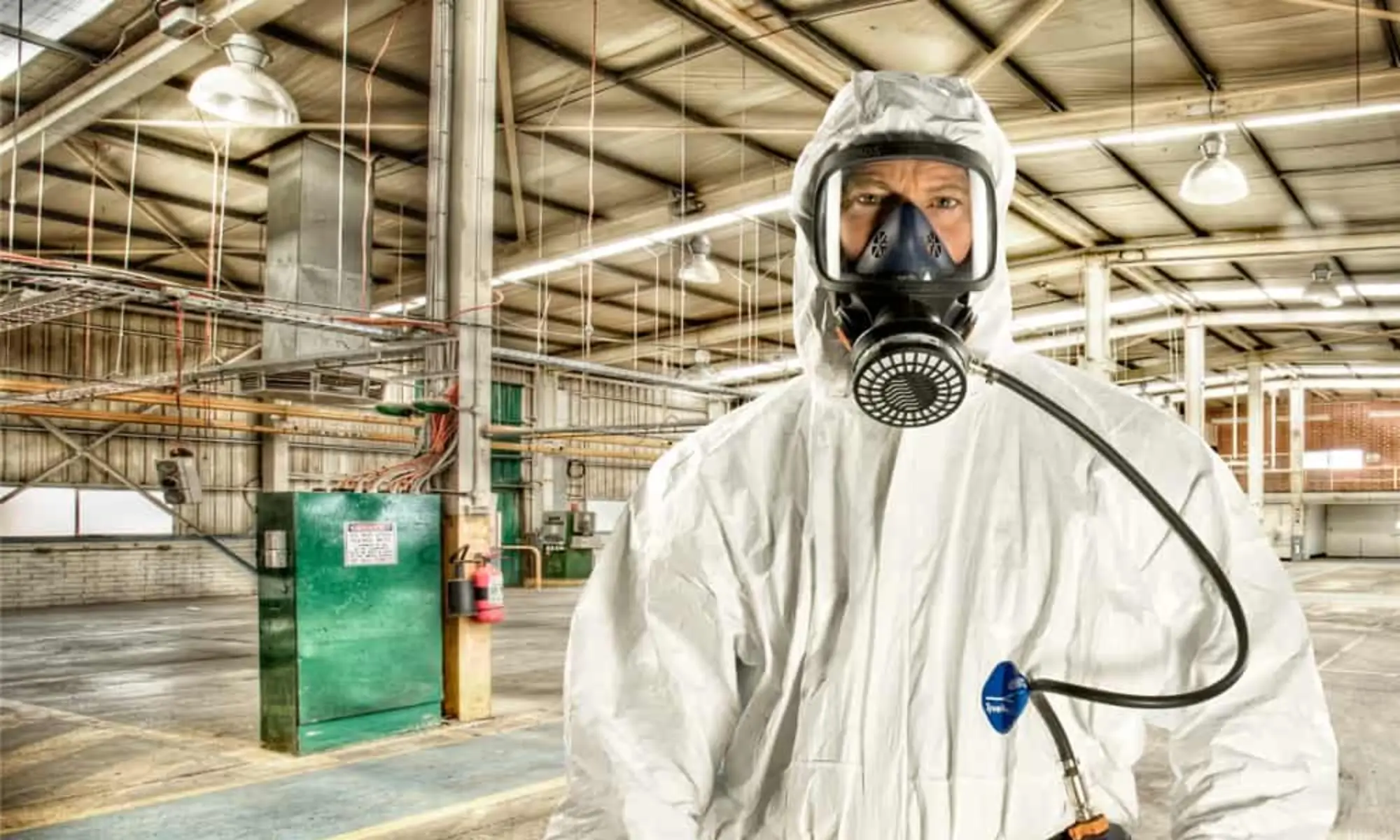
Government buildings are unique environments. They house critical public services, employ dozens or hundreds of workers, and welcome visitors daily. When asbestos abatement becomes necessary in these facilities, safety isn’t just important—it’s absolutely critical. A single lapse in protocol can expose workers, employees, and the public to dangerous asbestos fibers with long-term health consequences.
For facility managers overseeing government buildings asbestos abatement in Virginia, understanding the essential safety protocols helps ensure contractors are following best practices and protecting everyone in and around the building. This article breaks down the key safety measures that must be in place during every asbestos removal project in Virginia’s public facilities.
Why Safety Protocols Are Non-Negotiable
Asbestos is a known carcinogen. When its fibers become airborne and are inhaled, they can cause fatal diseases including lung cancer, mesothelioma, and asbestosis. These illnesses often take decades to develop, meaning exposure today can lead to tragedy 20-30 years down the line.
In government buildings, the consequences of inadequate safety protocols extend beyond individual health:
- Legal liability for government entities
- Workers’ compensation claims
- Building closures and service disruptions
- Public trust and confidence issues
- Regulatory violations and fines
That’s why professional government buildings asbestos removal in Virginia requires adherence to multiple layers of safety protocols, from federal OSHA standards to state regulations and industry best practices.
H4: Pre-Project Safety Planning
Safety begins long before the first piece of asbestos is removed. Professional contractors conduct extensive planning:
H4: Risk Assessment
Before work begins, contractors evaluate:
- Types and quantities of asbestos materials to be removed
- Condition of materials (intact vs. friable)
- Building occupancy patterns
- Adjacent spaces and potential exposure routes
- Environmental factors (HVAC systems, air flow patterns)
- This assessment shapes the entire safety strategy.
H4: Written Work Plan
Virginia regulations require a detailed, written work plan that includes:
- Project scope and timeline
- Containment strategies
- Worker protection measures
- Air monitoring protocols
- Emergency procedures
- Waste disposal plans
This plan must be available on-site for regulatory inspectors and facility managers.
H4: Regulatory Notifications
Contractors must notify appropriate agencies before beginning work. This typically includes:
- Virginia Department of Professional and Occupational Regulation (DPOR)
- Local building departments
- EPA (for certain project types and sizes)
These notifications ensure regulatory oversight and compliance.
H4: Worker Training and Certification
All workers involved in asbestos removal must complete specialized training:
- Initial asbestos worker training (minimum 32 hours)
- Annual refresher training (8 hours)
- Supervisor training for project leads
- Competent person training for site safety oversight
Workers must carry current certification cards and be able to demonstrate knowledge of safety procedures.
H4: Containment: The Foundation of Safety
Proper containment prevents asbestos fibers from spreading beyond the work area. This is the single most critical safety measure in any abatement project.
H4: Physical Barriers
Work areas are sealed using:
- Heavy-duty polyethylene sheeting (minimum 6 mil thickness)
- Multiple layers at critical points
- Specialized tape and fasteners designed for asbestos work
- Barriers that extend floor-to-ceiling with no gaps
Every penetration—doors, windows, vents, pipes, electrical outlets—must be completely sealed.
H4: Negative Air Pressure Systems
Industrial HEPA-filtered negative air machines are the backbone of containment safety:
- These machines pull air from the work area and exhaust filtered air outside
- They create negative pressure so air always flows into the containment, never out
- Multiple machines are used, with capacity based on work area size
- They run continuously, 24/7, throughout the project
Properly sized and maintained negative air systems can reduce airborne fiber concentrations by 99.97% or more.
H4: Airlock Entry Systems
Workers enter and exit through multi-chamber airlocks that prevent fiber migration:
- Clean room (where workers don protective gear)
- Shower chamber (for decontamination)
- Dirty room (for removing contaminated gear)
These airlocks maintain pressure differentials and prevent cross-contamination.
H4: Personal Protective Equipment (PPE)
Workers inside containment areas wear extensive protective gear:
H4: Respiratory Protection
- Half-face or full-face air-purifying respirators with HEPA filters (for lower-risk work)
- Powered air-purifying respirators (PAPRs) for extended work periods
- Supplied-air respirators for high-risk conditions
All respirators must be fit-tested to each worker to ensure proper seal and protection.
H4: Body Protection
- Full-body disposable suits with hoods and boot covers
- Multiple layers may be required for high-risk work
- Suits are taped at wrists, ankles, and hood to prevent fiber penetration
H4: Hand and Eye Protection
- Disposable gloves (often multiple pairs)
- Safety goggles or full-face shields
- Additional face protection under respirators when needed
All PPE is donned in the clean room and removed systematically in the decontamination chamber to prevent workers from carrying fibers out of the containment.
Air Monitoring: Continuous Vigilance
Air monitoring is required throughout asbestos abatement projects to ensure safety protocols are working:
H4: Inside the Containment
Personal air monitors attached to workers track their exposure levels. These samples ensure workers are not exceeding permissible exposure limits set by OSHA.
H4: Outside the Containment
Area air monitors are placed in spaces adjacent to the work area and in occupied portions of the building. These samples verify that fibers are not escaping containment.
H4: Real-Time Monitoring
Advanced projects may use real-time air monitors that provide instant feedback on fiber levels, allowing immediate response if concentrations spike.
If monitoring detects elevated fiber levels, work stops immediately until the cause is identified and corrected.
Work Practice Controls
Beyond containment and PPE, specific work practices minimize fiber release:
H4: Wet Methods
All asbestos materials are thoroughly wetted before, during, and after removal. Amended water (water mixed with surfactants) helps materials stay saturated and prevents fibers from becoming airborne.
H4: Gentle Removal Techniques
Workers use hand tools and careful techniques to avoid breaking or damaging materials unnecessarily. Power tools are used only when absolutely necessary and only with HEPA filtration and wet methods.
H4: Controlled Lowering
Materials are lowered carefully rather than dropped or thrown. This prevents impact that could release fibers.
H4: Continuous Wetting
Misting systems may be used to maintain moisture levels inside the containment area throughout the project.
H4: Waste Management Safety
Safe waste handling prevents fiber release and environmental contamination:
H4: Immediate Containerization
As materials are removed, they’re immediately placed in 6-mil polyethylene bags. Bags are sealed, labeled, and double-bagged.
H4: Waste Decontamination
Bag exteriors are wet-wiped or HEPA-vacuumed before leaving the work area.
H4: Secure Storage
Bagged waste is stored in a secure area away from occupied spaces until disposal.
H4: Proper Transportation
Licensed haulers transport waste in covered vehicles, following all transportation regulations.
H4: Final Walkthrough
Before turning the space back over, contractors conduct a final walkthrough with facility managers to ensure all safety protocols are followed and the area is ready for use.
Why Experience Matters
Safety protocols may seem straightforward on paper, but proper implementation requires experience, judgment, and attention to detail. Contractors specializing in government properties asbestos removal in Virginia understand the unique challenges of public facilities:
- Maintaining security and access control
- Protecting occupied adjacent spaces
- Working around critical building systems
- Adapting to unexpected conditions
- Balancing safety with minimal disruption
How Rath Enterprises, Inc. Prioritizes Safety
At Rath Enterprises, Inc., safety is our top priority on every government buildings asbestos abatement service in Virginia project. Our approach includes:
- Extensive pre-project planning and risk assessment
- State-licensed, highly trained crews
- State-of-the-art containment and monitoring equipment
- Strict adherence to OSHA, EPA, and Virginia DPOR standards
- Clear communication with facility managers and occupants
- Comprehensive documentation for compliance and peace of mind
We’ve successfully completed hundreds of asbestos removal projects in Virginia government buildings, from small offices to large public facilities, always maintaining the highest safety standards.
Don’t Compromise on Safety
When it comes to asbestos removal in government buildings, safety protocols are not optional extras—they’re essential requirements that protect lives and limit liability. Facility managers should never accept shortcuts or compromises on safety measures.
If your Virginia government building requires asbestos abatement, choose a contractor with proven expertise, proper licensing, and an unwavering commitment to safety protocols.
At Rath Enterprises, Inc., we’re dedicated to protecting Virginia’s government buildings and everyone who uses them. Contact us today to learn more about our safety-first approach to asbestos abatement in public facilities.
